
Muslim Women

OH YESS!!! We are going to learn about the true beauty of women behind their veils.
Thursday, February 21, 2008
My Recomendation!!
All I have to say is that I'm already through the first two parts of A Thousand Splendid Suns and I can't put the book down. I Keep going back for more. I recomend this to everyone because it's a story that brings you to tears and allows you to feel the pain, and the love that each of these characters go through. I love this book so much that I just had to make a blog saying it! (hahaha)


Wednesday, February 20, 2008
The Burqa
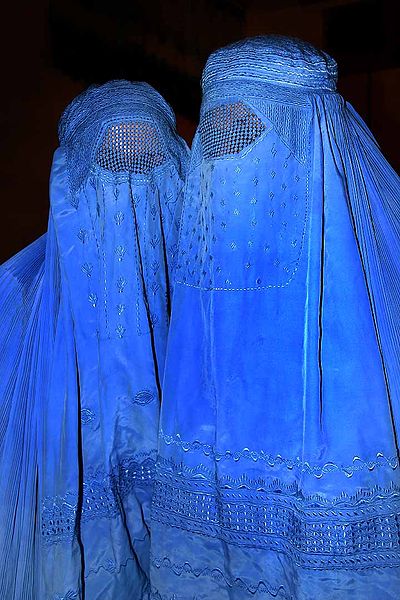
[Here is a picture of the burqa]
Some husbands force their wives to wear the burqa even if it is not necesseary for the woemn to wear it in their societies. Other women are forced to wear it becuase it is a law in their societies. If these women do not follow the law they are beaten, tortured or even killed. Then there are women who want to wear the burqa. I think if a women wants to wear the burqa, there is nothing wrong with it because she is choosing to wear it. But, if they are forced to wear it then I am totally against it. I mean what gives these men the rights to tell these women what to wear and do. What if these men were forced to cover their entire bodies, would they like it?
"Mariam had never before worn a burqa. Rasheed had to help her put it on. The padded headpiece felt tight and heavy on her skull, and it was strange seeing the world through a mesh screen. She practiced walking around her room in it and kept stepping on the hem and stumbling. The loss of peripheral vision was unnerving, and she did not like the suffocating way the pleated cloth kept presing against her mouth." (pg. 65)
WOW! Is it me or do these women have some power !?!?
In A Thousand Splendid Suns Jalil's wives seem to have power over him. It seems to me that they are the one's who don't want Mariam living with them. It seems like the wives are controlling Jalil to do what they want and think is best. Some things that led me to believe this is because in Chapter seven, when they inform Mariam about the arranged marriage the wives are the ones who are doing all the talking. The father just sits there looking down. He to me seems like he doesn't want this but is going along with it because this is what his wives want. I think his wives bring up the guilt of him cheating on them with Mariam's mother in the past and that this is all his fault.
I started to go back to other parts of the story, which help me believe that maybe his wives are the ones forcing him to do this. So, lets go back to where Mariam was in her father's guest room.
"That night Mariam couldn't sleep for a long time. She lay in bed looking at the sky, listening to the footsteps below, the voices muffled by walls and the sheets of rain punishing the window. When she did doze off, she was startled awake by shouting. Voices downstairs, sharp and angry. Mariam couldn't make out the words. Someone slammed the door." (p.39-40)
Hmmm... I wonder what they were arguing about? This was probably her father arguing with the wives to get rid of Mariam. The wives wanted to get rid of her but he probably objected to the idea at first because this is his daughter they are trying to get rid of. I don't think that Jalil did not care about Mariam. I think he cared about her deeply, the problem was his wives were in the way of him expressing his love towards her. In the past when Jalil would go on his visits to Mariams house to see her every Thursday's, his wives probably sometimes made him not go. If Jalil did not care about her he would not have visited her in the first place. I believe that Jalil is just a weak man, who can not stand up for what he believes in. I mean he needs to become stronger and be A MAN! This is his daughter. His own blood. And now he is letting her go only because his wives don't want to be embaressed by their friends and the people around them.
I started to go back to other parts of the story, which help me believe that maybe his wives are the ones forcing him to do this. So, lets go back to where Mariam was in her father's guest room.
"That night Mariam couldn't sleep for a long time. She lay in bed looking at the sky, listening to the footsteps below, the voices muffled by walls and the sheets of rain punishing the window. When she did doze off, she was startled awake by shouting. Voices downstairs, sharp and angry. Mariam couldn't make out the words. Someone slammed the door." (p.39-40)
Hmmm... I wonder what they were arguing about? This was probably her father arguing with the wives to get rid of Mariam. The wives wanted to get rid of her but he probably objected to the idea at first because this is his daughter they are trying to get rid of. I don't think that Jalil did not care about Mariam. I think he cared about her deeply, the problem was his wives were in the way of him expressing his love towards her. In the past when Jalil would go on his visits to Mariams house to see her every Thursday's, his wives probably sometimes made him not go. If Jalil did not care about her he would not have visited her in the first place. I believe that Jalil is just a weak man, who can not stand up for what he believes in. I mean he needs to become stronger and be A MAN! This is his daughter. His own blood. And now he is letting her go only because his wives don't want to be embaressed by their friends and the people around them.
Arranged marriages forced on women
After reading half way through part one of A Thousand and Splendid Suns we start to see so much happening to our main character Mariam. Mariam is a walking "shame" for her father and the rest of his family. So, her father arranges a marriage for her to be married to a man who is forty to forty five years old. Mariam doesn't want to marry the guy but is basically forced into the marraige. We see this on page 48 in part one of the novel: Everyone at the marriage ceramony are answering for Mariam but the Mullah tells them no that Mariam has to answer because the man is seeking her not the other way around. The Mullah told them that he was going to ask Mariam three times if she did not answer there was no marriage. After the Mullah asked her twice all Mariam heard was fidgeting in the room and then her father whispers her name. So, Mariam just says yes because it was like her father begging her to marry him. He was begging her to leave because he did not want her around only because of the fear of what others might say.
It is sad because this story relates to society. There are probably a lot of women who marry a man they don't even know. Who they don't even want to marry. This is all because the parents force their childs into it only because this is what they want and not what their daughter wants. These women then end up living unhappy lives that they never asked for or wanted. This is truely upsetting, and this part of the story almost brought me to tears. I was half angry at her for saying yes and giving into what they wanted. She had a chance to say no and end it right there but instead she gave in like most women who let men have power over them. The other half, I was angry at Jalil for being such a selfish individual. He only cares about what others in society might say and think, instead of just following his heart.
It is sad because this story relates to society. There are probably a lot of women who marry a man they don't even know. Who they don't even want to marry. This is all because the parents force their childs into it only because this is what they want and not what their daughter wants. These women then end up living unhappy lives that they never asked for or wanted. This is truely upsetting, and this part of the story almost brought me to tears. I was half angry at her for saying yes and giving into what they wanted. She had a chance to say no and end it right there but instead she gave in like most women who let men have power over them. The other half, I was angry at Jalil for being such a selfish individual. He only cares about what others in society might say and think, instead of just following his heart.
Tuesday, February 19, 2008
Blame her, NOT him!
If a womnen is pregant, individuals in society tend to blame the woman more than the man. They think that it is the woman's fault for allowing her self to get accidently pregnant. The man can easily leave the woman if he wants to and not have to take part in any responsibility unlike a woman. A woman has to make a decision whether to keep the baby or raise it on her own. Reading a Thousand Splendid Suns shows the readers what is happening in society today and what has happened back then.
The first chapter of the story we start to learn that Mariam's mother Nana ended up pregnant when she was not married to a man. The man who is Mariams father, Jalil was forced to not take responsibilty in taking in or helping Nana and his unborn child. The reason for this is because society would talk about him so instead he sent out Nana to another city.
"Nana said, "Learn this now and learn it well, my daughter: Like a compass needle that points north, a man's accussing finger always finds a woman. Always. You remember that, Mariam." (p.7)
A quote that Nana says to Maraim which I thought fit perfectly with how most men do excuse things on the women in their lives. Like for example, now we are starting to hear about how male athletes are doing bad once their wives or girlfriends come to watch their games. That these women are to blame for why these men are playing horribly or getting injured. In some countries if a women gets raped, the men tend to blame it on the women because the women were the ones making them do this. So, instead of punishing the man they punish the woman instead. I believe this incident happened in Saudia Arabia. There are many more incidents like these as well, where people are blaming the women for those problems.
The first chapter of the story we start to learn that Mariam's mother Nana ended up pregnant when she was not married to a man. The man who is Mariams father, Jalil was forced to not take responsibilty in taking in or helping Nana and his unborn child. The reason for this is because society would talk about him so instead he sent out Nana to another city.
"Nana said, "Learn this now and learn it well, my daughter: Like a compass needle that points north, a man's accussing finger always finds a woman. Always. You remember that, Mariam." (p.7)
A quote that Nana says to Maraim which I thought fit perfectly with how most men do excuse things on the women in their lives. Like for example, now we are starting to hear about how male athletes are doing bad once their wives or girlfriends come to watch their games. That these women are to blame for why these men are playing horribly or getting injured. In some countries if a women gets raped, the men tend to blame it on the women because the women were the ones making them do this. So, instead of punishing the man they punish the woman instead. I believe this incident happened in Saudia Arabia. There are many more incidents like these as well, where people are blaming the women for those problems.
The end of Dreams of Trespass
I have just finished Dreams of Trespass and I just have to say it was an amazing story. I wanted to talk about the ending of the novel when Fatima, who is the narrator is starting to realize that she is becoming a women and soon she will not be able to be friends with Samir any more. She starts to talk to Mina about it and Mina tells her the reason why women and men are seperated as they get older. She also, tells her that there is two sides the ones with the power and the powerless. I thought the novel was perfectly ended when Fatima asks Mina "how would she know what side she is on?" and Mina answers her telling her that, "if she can not get out, she is on the powerless side." The ending describes how most of the Muslim women's lives were in the past and for some in the present.
here is the ending passage from Dreams of Trespass:
"Suddenly I felt sad for no reason, and I went up to Mina on the terrace and sat by her side. She stroked my hair. "Why are we so quiet today?" she asked. I told her about my conversation with Samir, and also about what had happened in the Hammam(this is bathroom in arabic). She listened with her back to the western wall, her yellow headdress as elegant as ever, and when I had finished, she told me that life was going to be tougher from now on for both me and Samir. "Childhood is when the difference does not matter," she said. "From now on, you won't be able to escape it. You'll be ruled by the difference. The world is going to turn ruthless."
"But why?" I asked her, "and why can't we escape the rule of the difference? Why can't men and women keep on playing together even when they are older? Why the seperation?" Mina replied not by answering my questions but by saying that both men and women live miserable lives because of the seperation. Serperation creates an enormous gap in understanding. "Men do not understand women," she said, "and women do not understand men, and it all starts when little girls are separated from little boys in the hammam. Then a cosmic frontier splits the planet in two halves. The frontier indicates the line of power because whereever there is a frontier, there are two kinds of creatures walking on Allah's earth, the powerful on one side, and the powerless on the other."
I asked Mina how would I know on which side I stood. Her answer was quick, short, and very clear: "If you can't get out, you are on the powerless side." (Dreams of Trespass p. 242)
here is the ending passage from Dreams of Trespass:
"Suddenly I felt sad for no reason, and I went up to Mina on the terrace and sat by her side. She stroked my hair. "Why are we so quiet today?" she asked. I told her about my conversation with Samir, and also about what had happened in the Hammam(this is bathroom in arabic). She listened with her back to the western wall, her yellow headdress as elegant as ever, and when I had finished, she told me that life was going to be tougher from now on for both me and Samir. "Childhood is when the difference does not matter," she said. "From now on, you won't be able to escape it. You'll be ruled by the difference. The world is going to turn ruthless."
"But why?" I asked her, "and why can't we escape the rule of the difference? Why can't men and women keep on playing together even when they are older? Why the seperation?" Mina replied not by answering my questions but by saying that both men and women live miserable lives because of the seperation. Serperation creates an enormous gap in understanding. "Men do not understand women," she said, "and women do not understand men, and it all starts when little girls are separated from little boys in the hammam. Then a cosmic frontier splits the planet in two halves. The frontier indicates the line of power because whereever there is a frontier, there are two kinds of creatures walking on Allah's earth, the powerful on one side, and the powerless on the other."
I asked Mina how would I know on which side I stood. Her answer was quick, short, and very clear: "If you can't get out, you are on the powerless side." (Dreams of Trespass p. 242)
Monday, February 18, 2008
A Better future for Women?
""Life is looking good for women now," she said, "with the nationalists asking for their education, and the end of seclusion. For you know , the problem with women today is that they are powerless. And powerlessness stems from ignorance and a lack of education." (p.170)
This quote connects to my, WHen is the best time to rebel? blog. This is exactly why these women do not rebel because they are not educated. They just take in what they are told by others. The other day me and one of my friends from Yeman had a discussion about this. She was telling me how when she goes down there this summer her cousins are all going to be all happy and cheerful. Who they are going to get married and how many children they will have. The only goal in life for them is that they have to have a family and take care of them. She said when she was younger she used to think like that but once she came to this country, it opened her eyes to the truth. That taking care of your family is not the only thing women are suppose to do in life. They can actually do more.
This quote connects to my, WHen is the best time to rebel? blog. This is exactly why these women do not rebel because they are not educated. They just take in what they are told by others. The other day me and one of my friends from Yeman had a discussion about this. She was telling me how when she goes down there this summer her cousins are all going to be all happy and cheerful. Who they are going to get married and how many children they will have. The only goal in life for them is that they have to have a family and take care of them. She said when she was younger she used to think like that but once she came to this country, it opened her eyes to the truth. That taking care of your family is not the only thing women are suppose to do in life. They can actually do more.
How to get out of that well
"I did not tell them about the well, for fear that they would prevent me from hearing Mina's story again. And I needed to know all the details. I needed to hear that story told again, and again, so that I too, could cross the desert and arrive safely at the terrace. Talking to Mina was essential, because I needed to know all the details. I needed to know more- I needed to know how to get out of the well."(Dreams of Trespass p. 169)
Background of what happened before that:
She used this because Mina, one of the women in the Harem tells the narrator and the rest of the children a story about how she was kidnapped and placed in a well. To survive she could not let go of the rope or she would fall into the water full of snakes and other creatures. The narrator starts to have nightmares about being kidnaped and her parents want to know why but she doesn't tell them because she fears that they will tell Mina to stop telling her stories. The narrator can not afford that because she loves Mina and her stories. She also, hides in a olive jar and the other adults wonder why she hides in there but she makes up a lie trying to cover about the true reason why she hides in them. The narrator hides in them to practice surviving in a closed in area, like Mina had to do in the well.
Once I read this line it caught my attention quickly because she is not talking about getting out of a well that Mina was trapped in but that she is trying to get out of this Harem and the way all these women are trapped inside a house or gated commuity without being able to explore the world and see the things around her. She wants to learn what Mina did to keep on surviving so she can use it in the future. I thought it was nice how she used it that way to describe to us how she really feels: trapped and trying to survive in a world where there is not equality between men and women.
Background of what happened before that:
She used this because Mina, one of the women in the Harem tells the narrator and the rest of the children a story about how she was kidnapped and placed in a well. To survive she could not let go of the rope or she would fall into the water full of snakes and other creatures. The narrator starts to have nightmares about being kidnaped and her parents want to know why but she doesn't tell them because she fears that they will tell Mina to stop telling her stories. The narrator can not afford that because she loves Mina and her stories. She also, hides in a olive jar and the other adults wonder why she hides in there but she makes up a lie trying to cover about the true reason why she hides in them. The narrator hides in them to practice surviving in a closed in area, like Mina had to do in the well.
Once I read this line it caught my attention quickly because she is not talking about getting out of a well that Mina was trapped in but that she is trying to get out of this Harem and the way all these women are trapped inside a house or gated commuity without being able to explore the world and see the things around her. She wants to learn what Mina did to keep on surviving so she can use it in the future. I thought it was nice how she used it that way to describe to us how she really feels: trapped and trying to survive in a world where there is not equality between men and women.
Monday, February 4, 2008
Asmahan, The Singing Princess
The narrator in this novel talks to her readers for an entire chapter about a woman named, Asmahan, who all the Muslim women idol and respect. She was the princess of Lebanon, who was a singer and actress. She was the only woman who lived her life the way she wanted it because she looked at life as being precious every moment that she was breathing. She wore short skirts and clothing that revealed her body. The only thing in her life that she was forced into was marrying her cousin, Prince Hassan. Hassan could not take what Asmahan believed in and did, so he ended up divorcing her. The narrator compares her to another woman who never showed off her body publicly and followed all of the moral rules that were expected of women. Her name was Oum Kelthoum. Kelthoum built herself up from being a poor women and becoming famous. Here is a women that worked for what she never had in the past to be where she wanted to be and still followed what all women were suppose to do in society and she was still not respected by the other women as much as Asmahan was. This shows how amazing Asmahan was to all Muslim women because she is someone who they envy and want to be. She is someone who actually took a stand for herself and lived her life the way she wanted to live it. She had no one, not even her husbands interfere with it. Unfortunately she was assasinated. No one knows exactly what happened to her but believe that it had to do with secret agents. Others (men) say that this was her punishment for being such a disgrace. This again shows us that the men do not approve of what she does but did anyone stop her right away? If one women can accomplish her dreams, then why can't the other women in the Middle East and Arab countries do the same. If one women can make a difference, then all women can make a difference. They can all reach out for the dreams that they aspire in their lives. I believe that if more women were like Asmahan, there would be no more issues with equality between men and women in the Middle East.
When is the best time to Rebel?
"And in any case, you shouldn't rebel stupidly. You ought to carefully consider the situation, and analyze everything. Rebel when you know there is some chance you may win." (Dreams of Trespass p. 117)
In this passage the narrators mother tells her daughter that she needs to start depending on defending herself, instead of depending on Samir, who is a boy around the same age as her. The mother is telling her daughter that if she keeps on relying on men then she will never be able to stand up for what she believes in. Which is what all women should do no matter what the consequence is.
The words the mother uses about rebeling "when you know there is some chance you may win", has the readers thinking is this why most women do not rebel? Do they believe that they have no chance in winning to get equal rights with men? Is this what most of the women tell themselves everyday?
This might be the reason why these women do not rebel because most of the women are probably told that they have no chance against the men, who run their countries. This leads to them not even bothering with achieving equality among one another. All they can do is sit around at home all day taking care of their families and dreaming dreams that will never happen, unless they take action themselves.
In this passage the narrators mother tells her daughter that she needs to start depending on defending herself, instead of depending on Samir, who is a boy around the same age as her. The mother is telling her daughter that if she keeps on relying on men then she will never be able to stand up for what she believes in. Which is what all women should do no matter what the consequence is.
The words the mother uses about rebeling "when you know there is some chance you may win", has the readers thinking is this why most women do not rebel? Do they believe that they have no chance in winning to get equal rights with men? Is this what most of the women tell themselves everyday?
This might be the reason why these women do not rebel because most of the women are probably told that they have no chance against the men, who run their countries. This leads to them not even bothering with achieving equality among one another. All they can do is sit around at home all day taking care of their families and dreaming dreams that will never happen, unless they take action themselves.
Subscribe to:
Posts (Atom)